


Dar a luz en Mandakerenge: del rincón improvisado a una maternidad digna.


Cruzar el umbral del dispensario de Mandakerenge es adentrarse en un espacio donde la urgencia y la escasez conviven a diario. El edificio, de muros sencillos y suelos desgastados, revela en su entrada el desorden de lo necesario: documentos clavados en un tablero, cajas apiladas que guardan lo justo y una nevera azul como único bastión para conservar suministros vitales. Es el primer filtro, el rostro de una realidad sanitaria que hace lo que puede con lo que tiene.
Sin embargo, el verdadero pulso de este lugar se percibe al girar la vista hacia una de sus puertas interiores. Allí, el objetivo se acerca y la intimidad se revela cruda y contenida. Sentada en un camastro metálico, bajo la tenue protección de una mosquitera azul que cuelga improvisada, una joven madre descansa. Acaba de dar a luz. El cansancio se mezcla en su rostro con una calma frágil. En sus brazos, envuelto en una manta que parece un pequeño mundo de colores sobre sus faldas, su hijo recién nacido duerme ajeno a la austeridad del entorno.
Si abrimos el plano y entramos en esa zona postnatal improvisada, la escena cobra una dimensión diferente. Es una sala donde el tiempo parece detenerse. En el suelo de cemento, varias mujeres de la comunidad se sientan, pacientes, firmes. Están la madre y la abuela de la chica y otras mujeres que no la abandonan. No hay cómodos sillones ni espacio para la privacidad. Solo hay la presencia constante, las manos que se extienden y la mirada que vela. Son la red de apoyo inquebrantable que suple las carencias del lugar, el cuidado ancestral que se despliega en una habitación donde las condiciones materiales no acompañan la dignidad del momento.
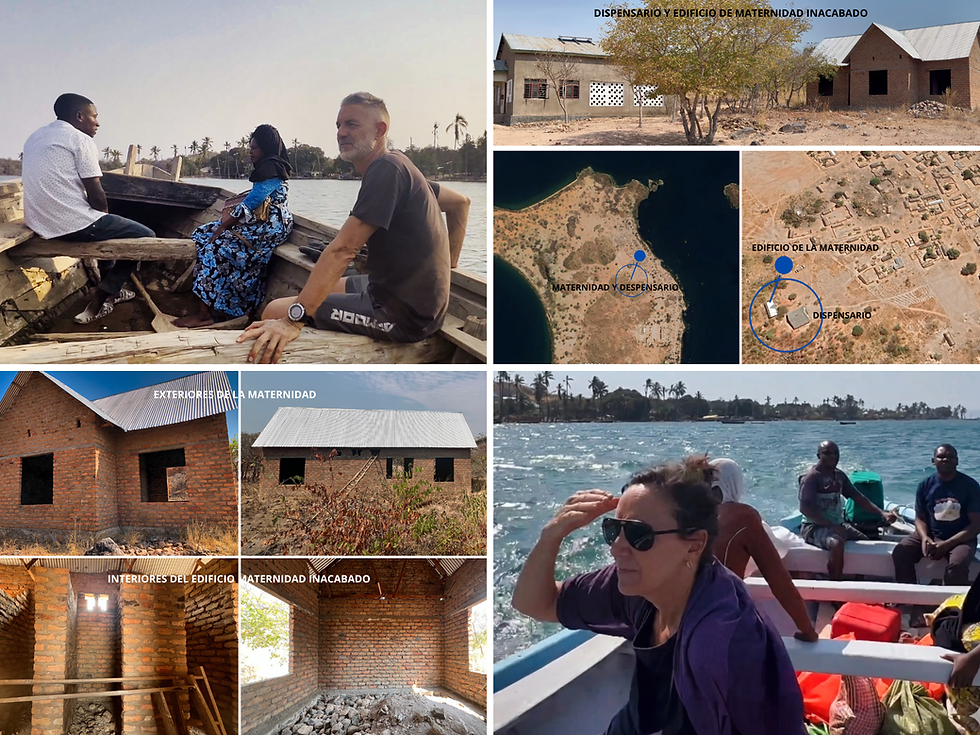
Es este escenario, lleno de vida pero también de una vulnerabilidad palpable, el que define el presente y, al mismo tiempo, el que la nueva maternidad está diseñado para transformar por completo. El cambio que ya se está construyendo supondrá que, muy pronto, pasemos de la sala de recuperación precaria, a un espacio luminoso y diseñado específicamente para el cuidado de las madres de la isla.
La nueva maternidad significará que el acto de dar a luz y las horas posteriores no sean una prueba de resistencia en un entorno compartido e inadecuado, sino un proceso seguro, íntimo y digno. Supondrá que cada mujer que llegue aquí encuentre un camastro equipado y preparado en una sala de recuperación con ventilación y espacio real, donde la mosquitera no sea una solución improvisada, sino parte de una infraestructura de salud de calidad. Significa que, aunque ese mismo grupo de mujeres comunitarias siga velando, lo haga en un entorno donde su apoyo sea emocional y familiar, no la única forma de cuidado disponible. La nueva maternidad está aquí para asegurar que el nacimiento en Mandakerenge comience con la seguridad, la privacidad y el respeto que cada madre y cada recién nacido merecen.
Giving birth in Mandakerenge: from the makeshift corner to a dignified maternity ward.
Crossing the threshold of the Mandakerenge dispensary is to enter a space where urgency and scarcity coexist daily. The building, with its simple walls and worn floors, reveals at its entrance the disarray of what is necessary: documents pinned to a board, stacked boxes containing just enough, and a blue refrigerator as the sole bastion for preserving vital supplies. It is the first filter, the face of a healthcare reality that does what it can with what it has.
However, the true pulse of this place is perceived when one turns their gaze toward one of its interior doors. There, the lens zooms in, and the intimacy is revealed as raw and restrained. Seated on a metal cot, under the thin protection of a makeshift blue mosquito net, a young mother rests. She has just given birth. Exhaustion mingles on her face with a fragile calm. In her arms, wrapped in a blanket that resembles a small world of colors on her lap, her newborn son sleeps, oblivious to the austerity of the surroundings.
If we widen the shot and enter this makeshift postpartum area, the scene takes on a different dimension. It's a room where time seems to stand still. On the cement floor, several women from the community sit, patient and resolute. The girl's mother and grandmother are there, along with other women who haven't left her side. There are no comfortable armchairs or space for privacy. There is only constant presence, outstretched hands, and watchful gazes. They are the unwavering support network that compensates for the lack of resources in the place, the ancestral care that unfolds in a room where the material conditions don't match the dignity of the moment.
It is this setting, full of life but also palpable vulnerability, that defines the present and, at the same time, the one that the new maternity ward is designed to completely transform. The change that is already underway will mean that, very soon, that same door will no longer lead to a precarious recovery room, but to a bright space specifically designed for the care of the island's mothers.
The new maternity ward will mean that giving birth and the hours that follow are not an ordeal in a shared and inadequate environment, but a safe, intimate, and dignified process. It will mean that every woman who arrives here will find a fully equipped and prepared cot in a well-ventilated recovery room with real space, where mosquito netting is not a makeshift solution, but part of a quality healthcare infrastructure. It means that, while the same group of community women will continue to provide care, they will do so in an environment where their support is emotional and familial, not the only form of care available. The new maternity ward is here to ensure that birth in Mandakerenge begins with the safety, privacy, and respect that every mother and every newborn deserves.


Comentarios